The Tech Behind AI Companion Visuals: Understanding 3DCG Models
Introduction
AI companions have come a long way from the text-only chatbots of a few years ago. Today’s platforms greet you with strikingly lifelike avatars — characters that can smile, tilt their heads, and look back at you with an almost uncanny sense of presence. Behind these visuals is a technology that most users never think about: 3DCG rendering powered by AI diffusion models.
In this guide, we’ll pull back the curtain on the image generation technology that gives modern AI companions their visual identity. We’ll focus on one model in particular — Nova 3DCG XL — to show how these systems work, why they produce such compelling results, and what it all means for the future of AI companionship.
What Is 3DCG in AI?
3DCG stands for 3D Computer Graphics — the same rendering technology used in animated films, video games, and visual effects. Traditional 2D illustrations are flat by design: an artist draws a character from a single perspective with hand-painted shading. 3DCG, by contrast, builds characters in three-dimensional space with realistic lighting, shadows, and surface textures that respond to their environment.
When applied to AI companion avatars, the difference is significant:
- Consistency — A 3DCG-style model can render the same character from multiple angles while maintaining a coherent appearance. Hair, skin, and clothing look the same whether the character is facing you or shown in profile.
- Lifelike quality — 3DCG rendering captures the subtle interplay of light on skin, the soft sheen of hair, and the depth of fabric folds. This gives characters a tangible, almost photographic presence without crossing into the uncanny valley.
- Expressiveness — Because the underlying representation has dimensional depth, expressions and poses feel more natural. A smile involves changes in lighting across the cheeks and around the eyes, not just a redrawn mouth.
This is why many AI companion platforms have moved away from flat anime-style artwork toward 3DCG-influenced visuals. The result feels more personal — more like interacting with someone rather than looking at a drawing.
Nova 3DCG XL: A Deep Dive
Nova 3DCG XL is a Stable Diffusion XL (SDXL) checkpoint — essentially a specialized version of the popular open-source image generation model that has been fine-tuned specifically for 3DCG-style illustration. It belongs to the broader Nova model family and is built on the “Illustrious” model architecture, a branch of SDXL known for high-quality character rendering.
What makes Nova 3DCG XL stand out from other SDXL checkpoints is its ability to occupy a sweet spot between illustration and photorealism. Rather than generating images that look like photographs or traditional anime drawings, it produces visuals with:
- Enhanced dimensional depth — Characters appear to exist in three-dimensional space with proper perspective and volumetric lighting.
- Polished surface rendering — Skin has a natural subsurface scattering quality, fabrics show realistic texture, and hair catches light in convincing ways.
- Stylistic coherence — Unlike some checkpoints that produce inconsistent or “noisy” results, Nova 3DCG XL maintains a consistent aesthetic across generations. Characters look like they belong in the same visual universe.
For AI companion platforms, this consistency is crucial. Users form attachments to their companion’s appearance, and any jarring shifts in visual style between interactions can break immersion.
LoRA Fine-Tuning for Character Consistency
One of the most important technologies working alongside checkpoints like Nova 3DCG XL is LoRA, which stands for Low-Rank Adaptation. Think of it this way: if the checkpoint is the artist’s general skill set, a LoRA is a specialized study of one particular subject.
A LoRA is a small, efficient add-on that adjusts a model’s behavior without retraining the entire system. In practice, this means you can take Nova 3DCG XL’s general ability to render beautiful 3DCG characters and layer on a LoRA that teaches it the specific features of one character — their face shape, eye color, hairstyle, and preferred clothing style.
How Companion Platforms Use LoRAs
AI companion platforms typically use LoRA configurations in several ways:
- Character identity LoRAs — These encode the specific appearance of a companion character. When a user creates or selects a companion, the platform may apply a LoRA (or generate one dynamically) to ensure that every image of that character looks consistent.
- Style LoRAs — These adjust the overall aesthetic. A platform might combine Nova 3DCG XL with a style LoRA that shifts the output toward a warmer color palette or a more anime-influenced look, depending on their brand identity.
- Combination and weighting — Multiple LoRAs can be active simultaneously, each with an assigned weight that controls its influence. For example, a character identity LoRA might be set to a weight of 0.8 (strong influence) while a lighting style LoRA runs at 0.3 (subtle adjustment). Finding the right balance is part art, part experimentation.
The research behind Nova 3DCG XL demonstrates this approach well. Creators in the Stable Diffusion community have found that combining the checkpoint with carefully weighted LoRAs produces results that are both aesthetically striking and remarkably consistent — exactly the properties that companion platforms need. For a complete breakdown of how checkpoints, LoRAs, and other model types work together in the generation pipeline, see our guide to ComfyUI model types.
The Aesthetic Possibilities
One of the most exciting aspects of 3DCG-style AI generation is the range of visual styles it can achieve. Nova 3DCG XL and similar models are not locked into a single look. Depending on the prompting and LoRA configuration, the same underlying technology can produce:
- Anime-influenced 3DCG — Characters with slightly larger eyes and stylized proportions, but rendered with 3D lighting and textures. This is popular on platforms targeting users who enjoy anime aesthetics but want something that feels more dimensional than traditional 2D art. The techniques behind converting between anime and realistic styles are explored in our anime-to-realistic conversion guide.
- Photorealistic rendering — Characters that approach photographic quality while maintaining a polished, slightly idealized look. This style is common on platforms that emphasize “virtual girlfriend” or “virtual boyfriend” experiences.
- Stylized and artistic — More expressive approaches that lean into bold lighting, dramatic color grading, or painterly textures. Some platforms use this for fantasy-themed companions or characters set in specific fictional worlds.
The choice of visual style is a significant branding decision for companion platforms. It shapes user expectations and emotional responses from the very first interaction. Platforms that serve a predominantly anime-loving audience make different aesthetic choices than those targeting users who prefer realism.
Experimentation within the Nova 3DCG XL community has shown that even subtle changes — adjusting the weight of a single LoRA by 0.1, or adding a few words to a prompt — can shift the output from one aesthetic register to another. This flexibility is what makes the technology so versatile for companion applications.
How AI Companion Platforms Use This Technology
Understanding the technical foundations helps explain features you may have noticed across various AI companion platforms:
Avatar Generation
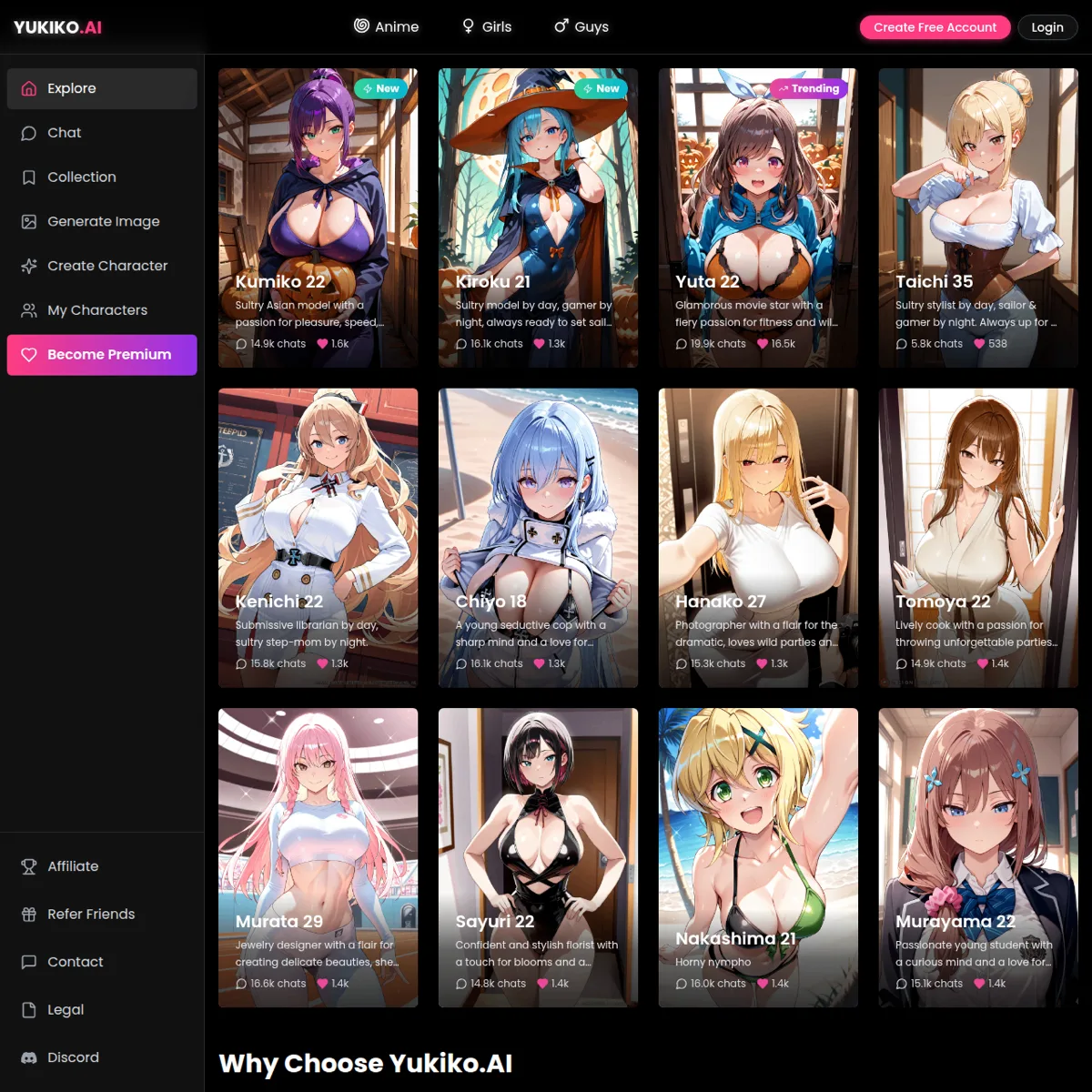
When you create a new companion or browse a platform’s character gallery, the profile images you see were likely generated using a checkpoint like Nova 3DCG XL (or similar models). Some platforms generate these in advance; others create them on the fly based on user-specified traits like hair color, eye shape, and style preferences.
Consistent Character Appearance
The reason your companion looks the same across different conversations and contexts is LoRA-based identity encoding. Without this technology, each generated image would be a roll of the dice — similar, but never quite the same person.
Dynamic Expressions and Poses
More advanced platforms generate multiple images of the same character in different emotional states or poses. A companion might appear happy, thoughtful, surprised, or playful depending on the conversation context. The 3DCG foundation makes these variations feel natural because lighting and perspective adjust realistically with each pose.
Scene Generation
Some platforms go beyond portraits to generate full scenes — a companion sitting in a café, walking through a park, or relaxing at home. 3DCG-style rendering excels here because it handles environmental lighting and spatial relationships convincingly, making the companion feel situated in a real space rather than pasted onto a background.
The Future of AI Companion Visuals
The technology we’ve discussed represents the current state of the art, but the field is evolving rapidly. Here’s where things are headed:
- Real-time 3D rendering — As GPU capabilities improve and models become more efficient, companion platforms may shift from pre-generated images to real-time 3D character rendering. Imagine a companion whose expressions change fluidly as you chat, rather than swapping between static images.
- AI-generated video — Video generation models are advancing quickly. Future companions may send short animated clips — a wave, a laugh, a reaction — rather than still images, adding another dimension to the interaction.
- VR and AR companions — With the growth of spatial computing, 3DCG technology is well-positioned to power companions that exist in virtual or augmented reality. The same dimensional depth that makes 3DCG avatars look good on a screen will translate naturally to three-dimensional environments.
These developments won’t replace the foundational technology described in this guide — they’ll build on it. The principles of consistent character rendering, LoRA-based identity, and stylistic flexibility will remain central to how AI companions look and feel.
Conclusion
The next time you see an AI companion’s avatar smiling back at you from your screen, you’ll have a better sense of what’s happening behind the scenes. Technologies like Nova 3DCG XL, LoRA fine-tuning, and 3DCG-style rendering work together to create visuals that feel personal, consistent, and genuinely appealing.
Understanding this technology isn’t just about satisfying curiosity — it helps you appreciate the craft behind the platforms you use and make more informed choices about which companions and platforms deliver the visual quality you prefer. As the technology continues to advance, the line between static avatars and living digital beings will only grow thinner.
This article was adapted from research originally published in Japanese, exploring the Nova 3DCG XL model for AI illustration.